
Charity
Buoy to the World! Scuba Santas return to The Lake
Get your Santa suits (and drysuits) ready, because the most festive dive of the year is back! Scuba Santas returns to The Lake on Saturday,
 Skip to content

Imagine gliding across the glassy surface of a calm lake as the sun dips below the horizon, painting the sky in hues of orange and purple. The gentle lap of water against the board, the quiet dip of the paddle – this is the serene allure of Stand-Up Paddleboarding.
It offers a unique feeling, almost like walking on water, providing a peaceful yet engaging way to experience familiar lake environments from a completely new perspective. Far from being just a fleeting trend, Stand-Up Paddleboarding or SUP, has established itself as a fulfilling activity that connects people with water, promotes fitness, and unlocks new avenues for exploration. Its accessibility is a key part of its charm, welcoming individuals across various ages and skill levels to participate.
Indeed, SUP has surged in popularity, becoming recognised as one of the world’s fastest-growing water sports. Reports documented it as the outdoor activity with the most first-time participants in the US back in 2013, and its momentum hasn’t slowed. Market analyses underscore this boom, with the global market valued in the billions and projected to continue its strong growth trajectory, indicating a significant and sustained interest worldwide.
This isn’t just a niche activity; it’s a reflection of a broader shift towards recreational pursuits that offer a blend of health benefits, low environmental impact, stress relief, and a direct connection with nature. The increasing presence of paddleboarders on local lakes is tangible evidence of this phenomenon. This article delves into the world of SUP, exploring its definition, fascinating history, fundamental techniques, essential gear, and numerous benefits, with a special focus on why it’s such a perfect pastime for lake enthusiasts.
So, what defines this popular water sport? At its core, Stand-Up Paddleboarding – commonly shortened to SUP – involves standing on a board that floats on the water and using a long, single-bladed paddle to propel oneself through the water. It’s often described as a hybrid activity, borrowing elements from other water sports; picture it as a cross between surfing, utilising a board for flotation and balance, and canoeing, employing a paddle for movement.
It’s important to understand that SUP is technically a sub-class within the broader category of paddleboarding. The term “paddleboarding” historically refers to the practice of lying or kneeling on a board and paddling with one’s arms, much like a swimming stroke, often used for crossing open ocean swells. Confusion often arises because online searches for “paddleboarding” frequently yield results dominated by SUP. Making this distinction clarifies the unique mechanics of SUP and respects the heritage of traditional prone paddleboarding.
While SUP shares roots with surfing, particularly in its Hawaiian development, its versatility allows it to be enjoyed far beyond ocean waves. It’s perfectly suited for calm seas, winding rivers, canals, and, significantly for many enthusiasts, the tranquil expanse of lakes. The combination of standing balance derived from surfing and the paddling mechanics akin to canoeing engages the body in a unique way, particularly targeting core muscles for stability and propulsion, which underpins many of its fitness advantages.
While modern SUP feels contemporary, the concept of standing on a floating platform and using a pole or paddle for propulsion stretches back millennia across various cultures. Though not direct ancestors of today’s sport, these ancient practices provide fascinating context.
Peruvian fishermen, as far back as 3,000 B.C., navigated the Pacific surf using “Caballitos de Totora” – unstable reed boats propelled with long bamboo shafts, sometimes even riding waves back to shore after fishing. Some historians even posit this might be the true origin of surfing itself. Elsewhere, ancient African warriors stood in dugout canoes, using their spears as paddles for stealthy movement. Records also suggest similar standing paddling activities in ancient Egypt, the Levant (using ‘Hasake’ boards still employed by Israeli lifeguards today), Italy (gondoliers), and China, illustrating the universality of the idea.
The direct lineage of modern SUP, however, traces clearly to Hawaii in the 20th century. On the iconic sands of Waikiki beach around the 1940s and 1950s, a group of legendary local watermen known as the “Waikiki Beach Boys” played a pivotal role. These individuals, deeply connected to the ocean and skilled in surfing, diving, and canoe paddling, became informal ambassadors of Aloha, teaching the growing number of tourists how to surf.
It was these Beach Boys, including figures like Bobby Ah Choy, who began standing on their large surfboards and using outrigger canoe paddles. Their initial motivations were practical: gaining a better vantage point to instruct students or to take photographs of tourists learning to surf. John “Pops” Ah Choy reportedly even kept his cigarettes dry in his hat while paddling standing up. This adaptation of existing surf gear for a new purpose is widely considered the birth of modern SUP.
Associated with this era is the legendary Duke Kahanamoku. An Olympic swimming champion, credited as the “father of modern surfing,” and a central figure among the Beach Boys, Duke embodied the spirit of Hawaiian water culture. While perhaps not the singular inventor of SUP, Duke was known to paddle large boards (possibly including an Australian surf ski) standing up, contributing to the environment from which SUP emerged. His influence solidified the connection between SUP’s origins and the rich heritage of Hawaiian surfing and the Aloha spirit.
After a period where the practice was less visible, SUP experienced a major revival in the early 2000s, again spearheaded by Hawaiian watermen. Big wave surfers Laird Hamilton and Dave Kalama famously began using paddles with oversized surfboards, initially as a cross-training method when the surf was flat. They quickly recognised its potential as a full-body workout that improved balance and core strength. Their experimentation and influence, along with contributions from others like Brian Keaulana, Archie Kalepa, Mel Puu, and Rick Thomas, were crucial. Hamilton and Kalama also drove innovations in board design, making them more stable and accessible, transforming SUP into the diverse sport it is today.
The critical step in its global spread occurred when Rick Thomas brought the practice from Hawaii to California around 2004. This introduction to the mainland US sparked wider interest, leading to the development of specialised SUP equipment and fuelling its explosion into a worldwide phenomenon enjoyed by millions. This history reveals SUP not as a single invention, but as a rediscovery and adaptation, deeply rooted in surf culture, driven initially by practicality and fitness needs – factors that continue to define its appeal today.
The calm, flat waters of a lake offer an ideal environment for newcomers to learn the fundamentals of Stand-Up Paddleboarding. The journey begins with simply getting onto the board. It’s best to start in water that is about knee-deep. Place the paddle horizontally across the board in front of the centre point (often marked by a carry handle) to aid stability. Approach the board from the side and climb on, aiming to get your knees positioned near the centre, roughly shoulder-width apart. Keeping your hands placed on the deck initially helps maintain balance.
Before attempting to stand, paddling from a kneeling position is highly recommended. This allows you to get a feel for the board’s stability and how the paddle interacts with the water. When ready to stand, place your hands flat on the board just ahead of your knees. Bring one foot up, placing it flat where your knee was, then smoothly bring the other foot up to match. Aim for a parallel stance with feet about hip-width apart, toes pointing forward, centred over the carry handle area. The key to stability is maintaining slightly bent knees, keeping your back straight, engaging your core muscles, and fixing your gaze on the horizon rather than down at your feet. Some initial wobbling is completely normal; small, controlled adjustments with your hips and legs will help maintain balance.
Once standing, the focus shifts to paddling. Proper paddle handling is essential for efficiency and control. One hand grips the top T-handle, while the other holds the shaft lower down. A crucial detail is ensuring the paddle blade is angled correctly – the face of the blade should angle away from you. The forward stroke, the primary means of propulsion, should originate from your core, not just your arms. Reach forward with the paddle, planting the blade fully into the water. Pull the paddle back alongside the board, using torso rotation and core strength, exiting the water near your feet.
To maintain a straight course, alternate paddling sides every few strokes. For turning, employ a sweep stroke: extend the paddle further out to the side and make a long, arcing motion away from the board. This will cause the nose of the board to turn towards the opposite side. To slow down or stop, simply drag the paddle blade in the water or plant it vertically behind you. Consistently maintaining the correct stance – feet parallel, knees bent, core engaged, eyes forward – is fundamental not only for movement but also for maximising stability and harnessing the fitness benefits inherent in the sport. Mastering these basic techniques forms the foundation for enjoyable and efficient paddling adventures.
One of the appealing aspects of SUP is that getting started doesn’t require an overwhelming amount of specialised gear, particularly for paddling on calm lakes. The essentials revolve around the board, the paddle, and safety items.
The board itself is the most significant piece of equipment. SUP boards come in two main types: solid (often called hard boards) and inflatable (iSUPs). Solid boards are typically constructed from materials like epoxy and fibreglass over a foam core. They generally offer the best performance in terms of glide, speed, and rigidity. However, their rigid nature means they require considerable storage space (like a garage or rack) and necessitate a roof rack or a large vehicle for transport.
Inflatable SUPs, on the other hand, have revolutionised accessibility. Constructed using durable PVC materials and drop-stitch technology (which involves thousands of fine threads connecting the top and bottom surfaces internally), iSUPs become remarkably rigid when inflated to the recommended pressure. Their major advantage is portability; when deflated, they can be rolled up and stored in a backpack, making transport and storage incredibly convenient, especially for those with limited space or needing to hike into a lake. While they might offer slightly less performance than high-end solid boards, modern iSUPs provide excellent stiffness and stability suitable for most recreational paddlers. The development of this inflatable technology has been instrumental in SUP’s growth, removing logistical hurdles and making the sport readily available to inland and lake users.
For lake paddling, certain board shapes are generally preferred. All-around boards are typically wider and offer greater stability, making them excellent choices for beginners, families, and casual paddling sessions. Touring boards are longer and have a pointier nose, designed to cut through the water more efficiently, providing better glide and tracking over longer distances – ideal for exploring larger lakes. Board size, specifically volume and width, impacts stability (wider is generally more stable), while length influences speed and how straight the board travels. Beginners are usually advised to opt for wider, more stable boards, and renting or borrowing different types first can be beneficial.
The paddle is the engine for SUP. Correct sizing is crucial for comfort and efficiency; a common guideline is for the paddle to be 6-10 inches taller than the paddler, though personal preference and paddling style can influence this. Using an incorrectly sized paddle can lead to poor technique and potential strain. Paddles are available in various materials, including aluminium (heavier, durable, affordable), fibreglass (mid-weight, good performance), and carbon fibre (lightest, stiffest, highest performance, most expensive). For recreational lake paddling, aluminium or fibreglass paddles often provide a good balance of performance and value.
Safety gear is non-negotiable. A leash tethers you to your board, preventing separation in case of a fall – essential even on lakes where wind can quickly push a board away. Coiled leashes are often preferred for flatwater paddling as they stay out of the water. A Personal Flotation Device (PFD), such as a life jacket or a more streamlined buoyancy aid, is also critical. Regulations regarding PFD use on SUPs can vary by location. Regardless of regulations, wearing a PFD is strongly recommended, especially for beginners, children, weaker swimmers, or when paddling in cold water or windy conditions. Comfortable, low-profile inflatable PFDs are a popular option.
Finally, a few extra items enhance the lake paddling experience: appropriate clothing like swimwear or quick-drying athletic wear, sun protection (hat, sunglasses, sunscreen), a waterproof bag for valuables, and a water bottle to stay hydrated. For cooler weather, wetsuits or neoprene layers may be necessary.
The widespread appeal of Stand-Up Paddleboarding stems from its unique combination of benefits that cater to the body, mind, and spirit. It’s more than just a way to get out on the water; it’s an activity that promotes holistic well-being.
From a physical standpoint, SUP offers a surprisingly effective workout. It engages muscles throughout the entire body, providing a comprehensive fitness experience. The constant need to maintain balance on the board delivers an exceptional core workout, strengthening abdominal and back muscles. This balancing act also significantly improves proprioception and overall stability over time. Paddling at a consistent pace provides solid cardiovascular exercise, benefiting heart health. Perhaps one of its most significant physical advantages is that SUP is a low-impact sport. The smooth gliding motion is gentle on the joints, making it accessible and enjoyable for people of various ages and fitness levels, including those who might find high-impact activities challenging.
Beyond the physical, SUP offers profound benefits for mental well-being. The simple act of being out on the water, surrounded by nature, has an inherently calming effect. The rhythmic motion of paddling and the focus required to maintain balance can induce a meditative state, helping to melt away stress and quiet the mind. SUP provides a unique vantage point – standing above the water offers clear views into the depths below and across the landscape. This elevated perspective, combined with the quiet propulsion, allows for intimate encounters with the natural world, whether observing fish beneath the surface, birds along the shoreline, or simply soaking in the tranquility of the lake environment. This deep connection with nature is often cited as one of the most rewarding aspects of the sport.
Furthermore, SUP is inherently social and recreational. It’s an activity easily shared with friends and family, allowing for conversation and shared experiences while paddling side-by-side. Some enthusiasts even bring their canine companions along for the ride. The combination of low-impact fitness, significant stress reduction, and direct engagement with nature hits a sweet spot for modern recreational needs, explaining why so many people are drawn to paddling their local lakes. It offers a form of active mindfulness, promoting both physical health and mental rejuvenation simultaneously.
Stand-Up Paddleboarding is far more versatile than simply paddling near the shore. The stable platform of an SUP board opens up a world of possibilities, allowing paddlers to engage in various activities, many of which are perfectly suited to the calmer conditions typically found on lakes. This adaptability allows SUP to merge with other popular recreational and wellness trends, significantly broadening its appeal.
One of the most popular lake-based disciplines is SUP Touring or Exploring. Using boards designed for efficiency over distance (touring boards), paddlers can embark on adventures to explore hidden coves, remote shorelines, islands, or simply enjoy a longer journey across the lake. It’s a fantastic way to see familiar waters from a new angle and access areas that might be difficult to reach otherwise.
SUP Yoga has gained immense popularity, combining the physical and mental benefits of yoga with the added challenge and serenity of being on the water. Performing poses on a floating board requires heightened focus and balance, intensifying the practice. The tranquil setting of a calm lake provides an ideal backdrop for this mindful activity.
For anglers, SUP Fishing offers a unique and effective way to pursue their passion. The board acts as a quiet, stealthy platform, allowing access to shallow areas or spots inaccessible to larger boats. Wider, more stable boards are typically preferred for fishing to accommodate gear and movement.
Many also use SUP purely for Fitness Paddling or Casual Racing. Paddling at a brisk pace over a set distance provides an excellent workout. Local communities often host fun races or fitness challenges on lakes. While other disciplines like SUP surfing and white-water SUP exist, they require specific conditions not typically found on most lakes. The ability of the basic SUP setup to integrate with and enhance activities like touring, yoga, and fishing demonstrates its remarkable versatility and explains its appeal to diverse interest groups.
Stand-Up Paddleboarding offers a compelling blend of accessible fun, low-impact fitness, and mental tranquillity. Its growing popularity is a testament to its unique ability to connect people with the water in a way that is both peaceful and rewarding.
If you’re curious to experience the feeling of walking on water for yourself, there is no better way to begin your journey. Come and visit us at The Lake to try paddleboarding on one of our Introduction to SUP workshops, where our friendly instructors will get you on your feet and gliding across the water in no time.
Get your Santa suits (and drysuits) ready, because the most festive dive of the year is back! Scuba Santas returns to The Lake on Saturday,
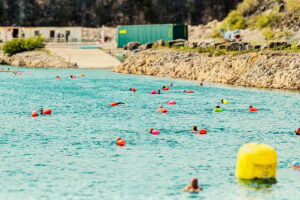
As part of our commitment to safety, we regularly test the water. These new results, based on samples taken on October 6, 2025, show fantastic
Exciting news for all our cold-water enthusiasts! The Lake is thrilled to be hosting The Bluetits Chill Swimmers’ “Nippy Dippers” event for a second year,
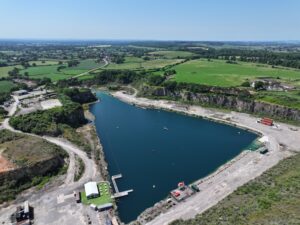
In the rural landscape of South Gloucestershire, near the village of its namesake, lies Cromhall Quarry. At first glance, it presents a scene of dramatic,